Vice Chair of the National Institute of Financial Research and director of research centers in international finance, green finance, and international digital capital.
Palgrave Macmillan · Textbook
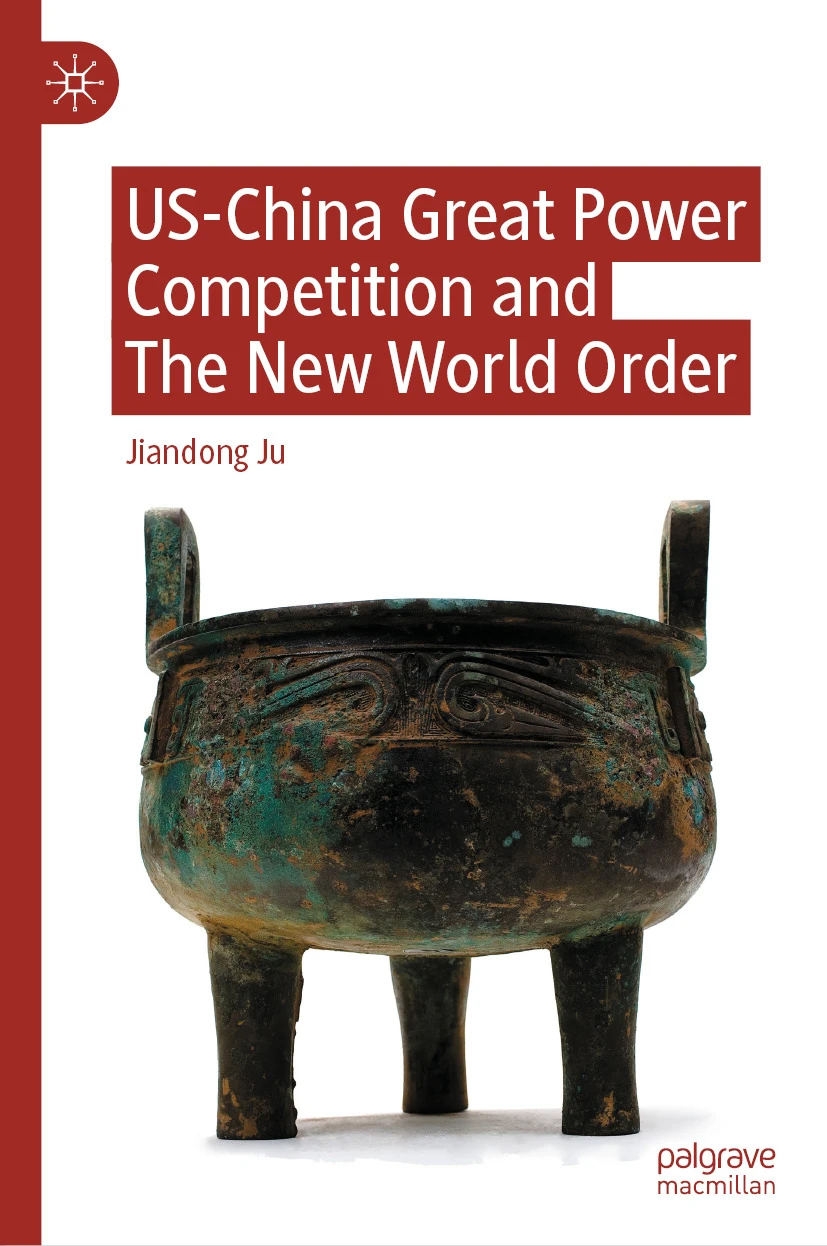
US-China Great Power Competitionand the New World Order
A systematic guide to how great powers compete across trade, technology, finance, security, and global governance.
14connected chapters
303pages of analysis
06fields of competition
Published by
Palgrave Macmillan
Available as an eBook or hardcover, with institutional licensing for libraries.
eBookHardcoverLibrary access
Choose a format

The central thesis
The world economy has become tripolar. Its institutions have not.
The book traces the tension between a three-centered global value chain and systems of money and governance still organized around a single dominant power.
01
Three production centers
China, the United States, and Germany anchor the Asian, North American, and European value chains.
ChinaUnited StatesGermany
Architecture of the argument
One argument, four movements
The framework moves from causes, to tactics, to equilibrium, and finally to practice.
Economic fundamentals
Trade conflict, growth, and the mechanics of great-power competition.
Chapters 1-3Tactical principles
The tariff war and mirror tactics as a method for avoiding confrontation.
Chapters 4-5Competitive equilibrium
Value chains, monetary power, world order, technology, finance, and governance.
Chapters 6-12Strategic practice
An innovative world and a ten-year strategy for China, 2025-2035.
Chapters 13-14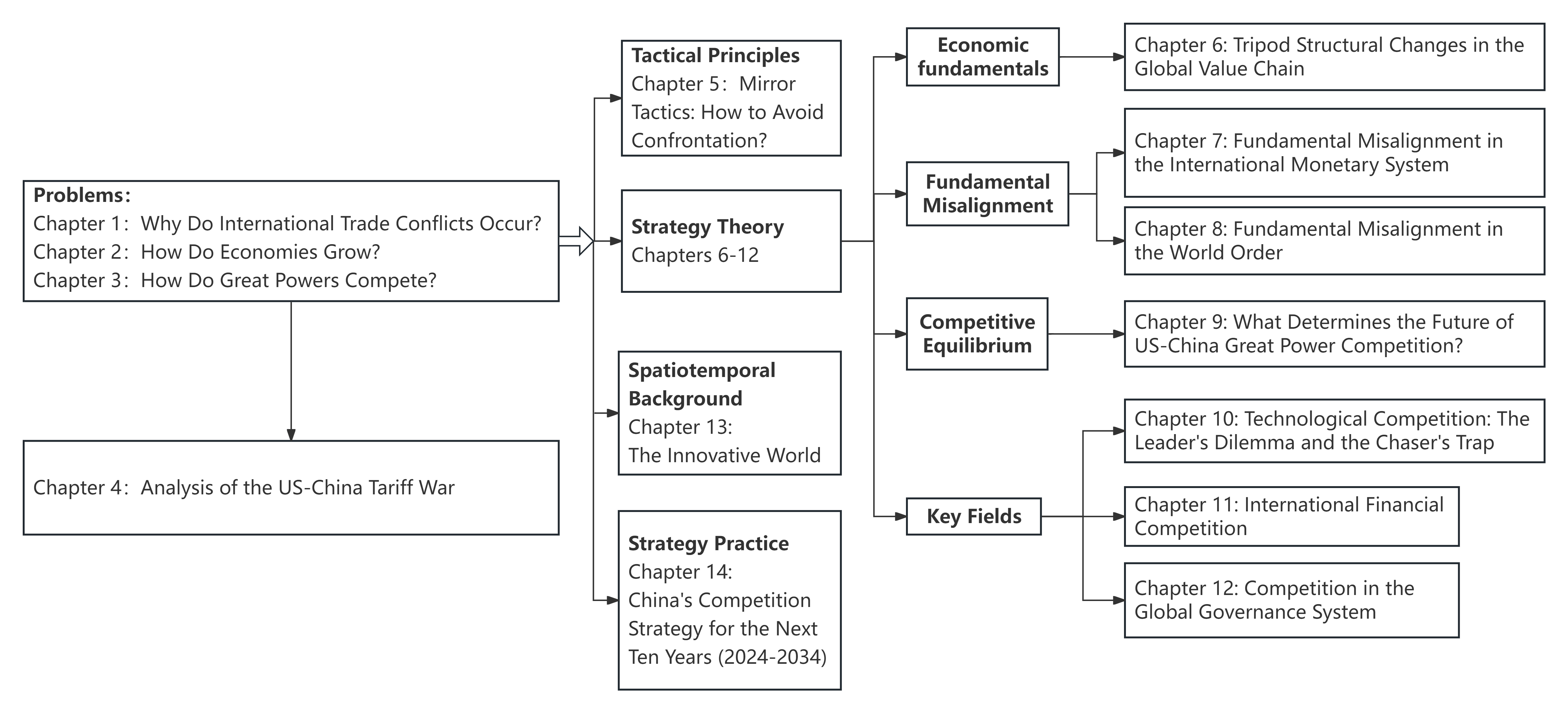
Inside the book
Fourteen connected inquiries
Each chapter develops one part of a common model of competition, crisis, and coexistence.
A long view
Four eras of globalization
Growth and competition change together. The book locates the current transition within four successive market structures.
- 01Local markets
Production and exchange begin within limited geographic systems.
- 02National markets
Industrial scale and state capacity bind domestic economies together.
- 03Global integration
Trade and investment organize production across borders.
- 04Tripolar globalization
Regional value-chain centers reshape the conditions of global competition.
Beyond the book
The New World Order Lecture Series
The book opens a continuing public conversation. Each programme brings its framework into dialogue with current events, expert perspectives, and audience questions.
Programme announcements forthcoming
01
Author lecture
Rethinking great-power competition
Jiandong Ju introduces the book's growth, crisis, and competitive-equilibrium framework.
02
Expert roundtable
Markets, money, technology, and rules
A cross-disciplinary discussion of the forces reshaping production, finance, and global governance.
03
Open dialogue
What kind of world order can endure?
An audience-led exchange on coexistence, institutional change, and the limits of strategic rivalry.
Read before the conversation
Start with the complete argument from Palgrave Macmillan.
Get the book
Conversations with Economists
Where the book meets other economic arguments.
A continuing series of focused exchanges with economists. Each conversation begins with one contested proposition from the book and tests it against a different body of evidence, method, or regional experience.
First conversation forthcoming
Growth and production
Can industrial upgrading escape the specialization trap?
Economists examine the relationship among market size, innovation, value chains, and long-run growth.
Money and finance
Can a tripolar economy retain a single monetary center?
A discussion of reserve currency power, capital flows, financial resilience, and digital payments.
Institutions and order
What would competitive coexistence require?
Economists test how trade rules, regional institutions, and third-party interests shape a durable equilibrium.
Book Reviews
Independent readings of the argument
Signed assessments are presented in full, including criticism and suggestions, so readers can evaluate the book through more than the author's own account.
US-China Great Power Competition and The New World Order
Jiandong Ju's book is "an ambitious and unusually wide-ranging attempt to construct a unified framework" for the economic foundations, strategic dynamics, and possible future of US-China rivalry.
Open review pageWatch
The argument in motion
A visual introduction to the book's central questions, analytical structure, and the conversations that follow.
Continue the inquiry